Showing posts with label pets. Show all posts

Tuesday, May 3, 2011

Tuesday's Tips for 5/3/2011

This week's three tips to help you conserve time, money and/or resources.
  • Tip #1: Remember your reusable shopping bags when you go to the store. Not only are you helping to keep down the use of plastic bags, some stores even reward you for being so conscientious. (Target gives you a 5-cent credit for each bag used. Might not seem like much, but it adds up!)
  • Tip #2: For many of us pet owners, it’s time to start thinking about flea and heartworm meds. Instead of purchasing these from your vet’s office, you can save some money by getting a written prescription instead. Then shop online (at reputable sources) to get these meds online. (For other ideas for saving on pet care, see this post or my guest post on My Pet Savings.)
  • Tip #3: Use olive oil around the house: rub or spray some on your measuring tools for easy clean-up of sticky substances like honey; rub it onto hand and arms (or faces) and allow the oil to soak into the skin for five minutes, then rinse with soap and water to remove paint from skin; rub a bit on a clean rag to prevent streaks, corrosion, and tarnish on stainless steel or brass.
You can check out last week's tips here. All of the tips so far are available here. And if you have a tip to share, I'd love to hear it. Email me.

Friday, April 22, 2011

How to be generous on a budget, Part 1: Charity

Despite signs that our economy is picking up, times are still tough. Grocery prices keep going up, and the cost of gas is frightening. So, how do you strike a balance between being wise with your money and being generous?
The good news is that it can be pretty easy to give back without having to spend a lot.
1.      Pick up extra. If there’s a good deal on something that you use—say, toothpaste or cans of tuna—(or even something you don’t) such that you can get it for free or with little cost, think about picking up that item to donate.  Food pantries will take non-perishables.  Many soup kitchens will take produce. Women’s shelters are thrilled to receive shampoo, soap, toothpaste, feminine hygiene items, deodorant, shaving cream and the like. And don’t forget out furry friends! A can of dog or cat food can be less than $1 and will allow someone receiving their own meals from Meals on Wheels to feed their pet.
2.      Instead of throwing it out, donate it. Did you know that most animal shelters will gladly take old blankets, towels and pillows? Often they can use old stuffed animals and even empty pill bottles (they use them to send home meds with adopted pets). In Rochester we have a “craft thrift store” which accepts and then resells craft items and unfinished craft projects. Many school teachers are grateful to get craft supplies for their classrooms. Old magazines might be welcome at local medical or dental offices; I take mine to the waiting area at my mechanic’s.
3.      Donate your time.  Charitable organizations need physical help as much as they need monetary and in-kind donations. Habitat for Humanity would not be able to build houses if people did not volunteer their time to lay the foundations and build the walls of those homes. The local poor would not get fed at the soup kitchen if volunteers did not help prepare the food. Yes, it is a sacrifice. But it won’t cost you a cent.
4.      Better yet, donate a skill. If you have a professional skill, a few hours of your time donated to a worthy cause can be invaluable. If you’re a seamstress, you could sew costumes for the local high school’s theater department. Or make pillowcases dresses for little girls in Africa. If you’re an artist, you might make a great docent at the local art museum. Do you know how to repair bicycles? There are organizations that help fix up old bikes for kids whose families can’t afford their own. I knit blankets for the animal shelter using leftover yarn and yarn I wouldn’t use for other projects. Project Linus provides homemade blankets to children who are terminally ill or traumatized. If you can read, then you have a skill that is in demand by Literacy Volunteers.
5.      Does your company match gifts? My employer has policy of matching certain gifts, and also offers a “dollars for doers” program where they will match volunteer hours by employees with a monetary gift to the charity. They also provide two paid volunteer days to full-time employees. Find out if your employer offers any similar programs and be sure to take advantage of them.
If you’re not sure where to begin, try VolunteerMatch.org to find a charity that supports what is important to you. If you aren’t sure what charity might be able to use whatever items you have to give, a few Google searches, or looking at local charity “wish lists” might be helpful.

Next up: How to be generous on a budget, Part 2: Gift giving

Tuesday, April 12, 2011

Tuesday's Tips for 4/12/2011

This week's three tips to help you conserve time, money and/or resources.
  • Tip #1: Keep a few basic tools handy in a kitchen drawer for everyday use and avoid digging out the toolbox. I suggest this collection should include a flat head screwdriver, Phillips head screwdriver, tape measure, needle-nose pliers and maybe a hammer.
  • Tip #2: Make your own laundry soap. It's pretty easy, really cheap and you'll know what's in it. Find recipes here: http://tipnut.com/10-homemade-laundry-soap-detergent-recipes/.
  • Tip #3: If you have dogs or cats, it's likely that you are constantly battling their fur ... everywhere. To help get the fur off your clothes when you launder them, wash all loads on the highest water level. The higher water level helps jostle the fur out.
You can check out last week's tips here. (Well, they're really from two weeks ago--sorry!)
And if you have a tip to share, I'd love to hear it. Email me

Sunday, March 27, 2011

Baby food + Cream of Wheat + powdered milk = happy dog!

Before I recount my adventures in baking for my pets, I wanted to mention a few more ideas about saving on pet needs.
Pet insurance is available. It is traditional-style insurance, where you pay upfront and get reimbursed after submitting claims. According to what I've read, it sounds like it's not likely to save you money. If you are interested in more information, check out http://www.petinsurancereview.com/.
An option I think is definitely worth it is investing in the pet first aid course offered by the Red Cross. You'll have to check with your local chapter to see if they offer the class and when. It costs about $35. You'll learn to check capillary refill time, how to check for dehydration, dog/cat CPR and lots of other things that can help you be prepared should your pet show signs of illness or injury.
Now, to the kitchen!
My goal was to make something that would hopefully be healthful and inexpensive. I didn't want to make crunchy biscuits. There are lots of healthful dog biscuits out there. I wanted something that was sort of chewy, as well as easy that would keep well. The recipe I settled on had just 3 ingredients: 3 jars of meat-flavored baby food, 1/4 cup Cream of Wheat, 1/4 cup of powdered milk. I started with 2 jars of beef Gerber and 1 chicken and vegetables.

The reviews of the recipe indicated that the dough would probably need more dry ingredients, and they were right. So I added more CoW and dry milk. I also added whole wheat flour and some oatmeal. The dough still sticky and was not such that I could roll it into balls.
So, I pulled out the trusted cookie scooper and plopped scoops onto sil-pat on cookie sheets.  (The recipe technically calls for "generously greased cookie sheets.") This method worked fine. I attempted to "flatten slightly with fork" but the dough's consistency meant my attempts more smeared and smooshed than "flattened slightly."
I baked them for about 15 minutes, till the treats started to brown. Then I removed them from the oven, letting them cool on the cookie sheets.
Once cooled, they were presented to the in-house taste-tester. He seemed to approve!
As far as health benefits are concerned, these likely beat, say, the Snausages or Tiny T-Bones ingredient-wise. However, baby food isn't cheap. And this recipe made only about 20 1.5-inch round treats (which should be refrigerated and/or frozen.) So, the savings would likely be more long-range health benefits than a short-term cash saving.

Thursday, March 24, 2011

How to save on pet needs

I share my home with three furry four-legged creatures. Here’s the cast:

Sebastian (aka Bubby) is my beloved almost-twelve-year-old Chihuahua. Weighing in at about 6.5 pounds, he loves napping—preferably in the sun, string cheese and bullying the cats. I’ve had him since he was a puppy. His lovely black fur is now salt-and-pepper gray, making him a distinguished older gentleman. I’d like to claim that his “accidents” on the floor are due to his advancing age, but, in reality I’m pretty sure he’s just lazy since they’ve been happening his entire life. People who claim to dislike Chihuahuas will often admit to a fondness for this little guy. (I always joke that if my dog-rearing skills indicate how I'd do at parenting, my kids would be very well-adjusted, excepting the fact that tghey still wouldn't be potty-trained at 40.)
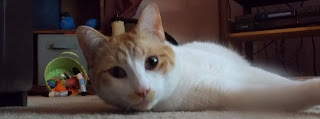
Artemis (Artie) is about 3 years old. He is not the brightest bulb, but he makes up in sweetness what he lacks in brains. He’s a good boy who enjoys napping, watching birds and taking over a lap. In fact, if you sit still for more than 10 minutes he will make himself right at home on top of you. However, don’t be fooled as he stretches out in the middle of the living room; he does NOT like his belly rubbed. Oh, and he is absolutely petrified of the mailman. Seriously, terrified.

Dilbert is a few months shy of his first birthday. He is naughty. He wakes me up every morning by 5:00 A.M. He is also very vocal, making all kinds of chirps and meows. He is also quite a snuggler and does love his belly rubbed. Dill steals headbands, rubber bands, bath puffs, and just about anything that seems fun when he bats at it. Apparently the shower curtain is also a great toy. Earlier this week, he pulled down the curtains in the yellow bedroom, including yanking down one of the brackets for the rod. I have had to securely stash all my yarn when not in use otherwise, he'll unravel it all through the house.

They are lucky that they are cute, soft and sweet.

It seems logical that as I’ve gotten older and my “quality of life” has increased, so has the quality of life for the beasts in my care. If anyone benefits from my being single, it’s the pets. I have become picky about what they eat. So while Riot Grrrl (may she rest in peace) started her life on 99-cent boxes of Dad’s brand cat food from Marc’s, now all of my pets get organic food. When I adopted Artie and Dilbert in January, I also determined that I wanted to use a more earth-friendly cat litter, so I’m no longer purchasing clay litter. When Riot Grrrl was ill, I chose to give her various medications. But these choices come at a financial cost.

So, here are some suggestions on minimizing pet expenses.

1. Adopt. You’ll save the life of a furry friend. You’ll save money over buying a pure breed pet. AND mixed breed pets have less health issues over their lives than do pure breed pets.

2. Feed your pet quality food. Some information on what to look for is available here.
Other ways to save on pet food and treats:
  • Use coupons. Check out the same sources you'd use for grocery coupons. (See my post on saving at the grocery store for sources.) Also, be sure to check out MyPetSavings for pet-related deals and coupons.
  • Use loyalty cards or frequent buyer programs. Large chains often offer discount cards. Many pet stores also buy-X-bags-of-Y-food-get-one-bag-of-Y-food-free programs.
  • Consider Amazon’s Subscribe & Save. You'll get 15% off and free shipping.
  • Buy in bulk. Buy the largest size you'll actually use. If you're buying canned food, buy by case.
  • Compare prices at various stores. You'd be surprised. Pet food isn't necessarily cheaper at the pet store than it is at the grocery store.
  • Make your own. If you're interested, here's a place to start.
3. Maintain your pet’s good health. This means GETTING YOUR DOG OR CAT SPAYED OR NEUTERED. (Yes, I’m shouting.) It also means yearly—at a minimum vet visits—and getting and keeping up on all routine shots. This is one of those areas where an ounce of prevention really is worth a pound of cure (heartworm, rabies.) While I recommend finding a vet you like [If you live in the Akron, Ohio, area, please consider the fabulous staff at Keystone. In Rochester, we are grateful to have found the fabulous Dr. Robin Lovelock.], if your pet is young and healthy, you can save money by visiting a vaccination clinic. If you have a veterinary college in your area, you may be able to save by seeing a veterinary student.  [In the  Akron area, you are blessed to have Pet Guard where low cost veterinary care is available.] Remember that our dogs and cats age at a faster rate than we do. So regular care is terribly important. Skipping a dog or cat’s annual vet visit is like your not having a physical for 10 years.
Also, take your pet to the vet when he or she shows signs of illness. Unless you know what you’re dealing with, don’t “wait it out.”
There aren’t many ways to save on vet bills, but there are a few things you can do.
If cost is an issue, let the doctor know up front. That way, she might be able to provide you with options. And whatever option you choose, be sure to get an estimate up-front.
Ask for prescriptions for things like heartworm pills, or other medications, then buy them online from a reputable source that has the best price.
You can also consider CareCredit. I rarely use my credit cards, but almost all vet bills go on my CareCredit account. They provide six months interest free to pay the expenses and it provides me with an easy way to keep track of my vet expenses.

4. Grooming. Regular brushing and bathing is important for all doggies and kitties. To keep expenses low, consider a pet with low grooming needs. If it’s too late, or you just MUST have a standard poodle, then consider learning to groom the pet yourself. [Sebastian does not like his feet messed with, so I gladly pay the folks at Unipet for that task.] A happy medium may be a visit to the “dog wash” where you bathe, brush and dry your pet then leave the mess behind.

5. Toys. Toys can be expensive. Check out holiday clearance at pet stores to save. Also, discount stores like Tuesday Morning, Big Lots and Ollie’s can be great places to score good quality pet toys at discount. Don’t forget to check out Target, TJ Maxx and Marshall’s.

6. Dishes. Cute little ceramic pet bowls can cost $5 or more. I buy small bowls at the thrift store for about a quarter each and use those. The dog and cats don’t seem to care what the food’s served in.

7. Keep pets close by. Pets who leave your yard unattended are more likely to come into contact with other animals that are carrying illness and/or hazards.

Next up: I'll be making a homemade dog treat recipe that uses baby food and Cream of Wheat. We'll see how it goes and get Bubby's review.

Tuesday, March 8, 2011

Tuesday's Tips for 3/8/2011

This week's three tips to help you conserve time, money and/or resources.

  • Tip #1: Most Classico brand pasta sauce jars can be re-used for home canning. Check by seeing if a standard home canning ring will fit.
  • Tip #2: If you live in the Rochester area and plan to adopt a pet this year, have a pet spayed or neutered or make a donation to Monroe County Dog Park, be sure to take advantage of Pet Saver Superstore's Responsible Pet Owner Club. They'll give you up to $50 in gift certificates to the store for these things.
  • Tip #3: Keep a flat head screwdriver, phillips head screwdriver, tape measure and a pair of needle-nose pliers in the kitchen for quick access to tools for small repairs.
Check out last week's tips here.
And if you have a tip to share, I'd love to hear it. Email me!